CHAPTER 17 / 20
Missions, empires and travelling images
Spreading faith, translating forms and examining power in encounters between societies.
Sixteenth–nineteenth centuries · missions and empires

Saint John the Baptist Preaching
Paolo Veronese
1562 · painting date
01
Circulation is never only aesthetic
Early modern Christian missions belonged to networks joining Europe, the Americas, Africa and Asia. They intersected with empires, commerce, domination and local initiatives. Conversion, coercion, translation and appropriation cannot be flattened into one harmonious story of diffusion.
Communities receiving or adopting Christianity were not passive audiences. They interpreted, transformed and sometimes contested its forms. The history must also recognise violence, enslavement, resistance and artists whose social status restricted recognition.
Saint John the Baptist Preaching
Paolo Veronese
1562 · painting date
Borghese Collection

Saint Elisabeth of Hungary healing the poor
Bartolomé Esteban Murillo
1672 · painting date
Hospital de la Santa Caridad
02
Preaching, caring and representing
John the Baptist preaching, the distribution of bread and care for the poor gave Christian societies ways of expressing ideals. Veronese’s and Murillo’s works are not direct records of every overseas mission. They reveal languages of teaching and charity that institutions could employ.
James Tissot reverses the usual viewpoint of the Crucifixion. His engagement with biblical narratives and travel shaped a nineteenth-century project of representation. A pictorial reconstruction is not proof of precisely how a first-century event was seen.
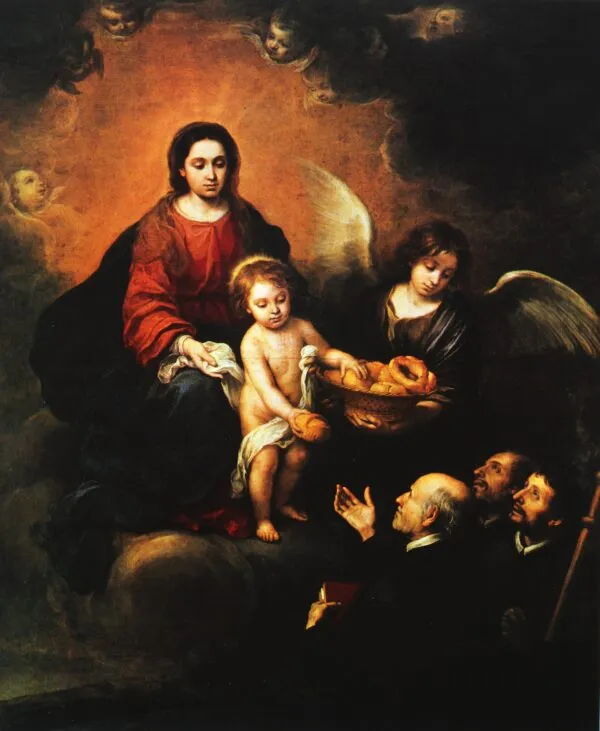
The Infant Christ Distributing Bread to the Pilgrims
Bartolomé Esteban Murillo
1678 · painting date
Museum of Fine Arts, Budapest
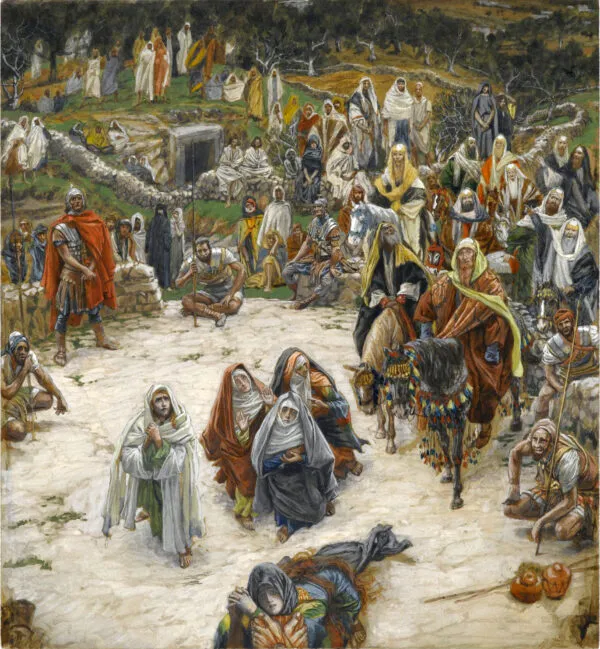
What Our Lord Saw from the Cross
James Tissot
1890 · painting date
Brooklyn Museum
03
Recognise interpreters and inequalities
The Met’s Juan de Pareja exhibition resources examine painting, slavery and recognition in seventeenth-century Spain. Pareja was a painter himself, not only the subject of a famous portrait. This source extends the chapter without falsely assigning his name to a selected painting.
Studying travelling imagery requires attention to languages, prints, workshops and local uses. Movement of a form does not imply absence of creativity. Entries help locate artworks and collections without erasing the people who made them.
RESEARCH & FURTHER READING
Sources for this chapter
Museum links accompanying the paintings lead to institutional collection information. Display, loans and access can change; consult the museum before visiting.