CHAPTER 15 / 20
Religious conflict and learning to coexist
Crusades, confessional divisions, power and everyday life: looking without glorifying violence.
Eleventh–eighteenth centuries · conflicts and coexistence

The Massacre of the Innocents
Pieter Brueghel the Elder
1566 · painting date
01
Religion and power resist simple formulas
Conflicts involving Christianity did not all have the same causes. Medieval crusades and early modern confessional wars belonged to different settings. Beliefs, authorities, territories, dynasties and social interests could intertwine. Describing them as purely religious, or as conflicts in which religion played no part, would both be inadequate.
History must include victims, displacement, destruction and experiences of coexistence. It is not a ranking of communities imagined as eternally tolerant or intolerant. Exclusion and local accommodation could coexist within the same society.
The Massacre of the Innocents
Pieter Brueghel the Elder
1566 · painting date
Royal Collection

Christ and the Woman Taken in Adultery
Pieter Brueghel the Elder
1565 · painting date
Courtauld Institute of Art
02
Paintings shift the view
Bruegel’s Massacre of the Innocents represents a biblical narrative through imagery also belonging to his own age. It is not dated reportage of every sixteenth-century political violence. Christ and the Woman Taken in Adultery prompts a different reflection on judgement and collective action.
A church interior and a Westminster procession show worship and public representation. Apparent calm does not establish that their societies were free from conflict. Images select moments, places and ways of organising them.
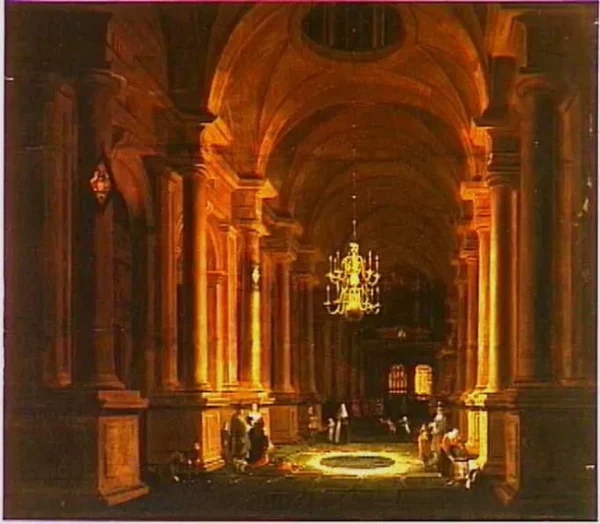
Church interior at night
Anthonie de Lorme
17th century · painting date
New York Historical
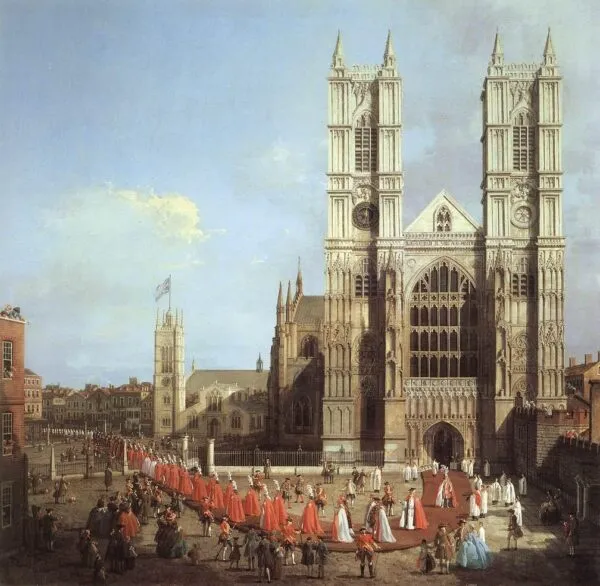
London: Westminster Abbey, with a Procession of Knights of the Bath
Canaletto
1749 · painting date
Westminster Abbey
03
Toleration has its own history
Arrangements for coexistence, rights for particular groups and freedom of conscience are not identical concepts in every age. Archives reveal changing formulations and restrictions rather than allowing contemporary definitions to be projected directly onto the past.
Modern religious-freedom documents are dated, situated positions. They can illuminate change without erasing earlier conflicts. The chapter brings works and sources together to show these differences, not to justify violence through its artistic representation.
RESEARCH & FURTHER READING
Sources for this chapter
Museum links accompanying the paintings lead to institutional collection information. Display, loans and access can change; consult the museum before visiting.