CHAPTER 14 / 20
Catholic reform and Baroque intensity
Images teach, move and express belonging within institutions undergoing transformation.
Sixteenth–seventeenth centuries · Catholic reform
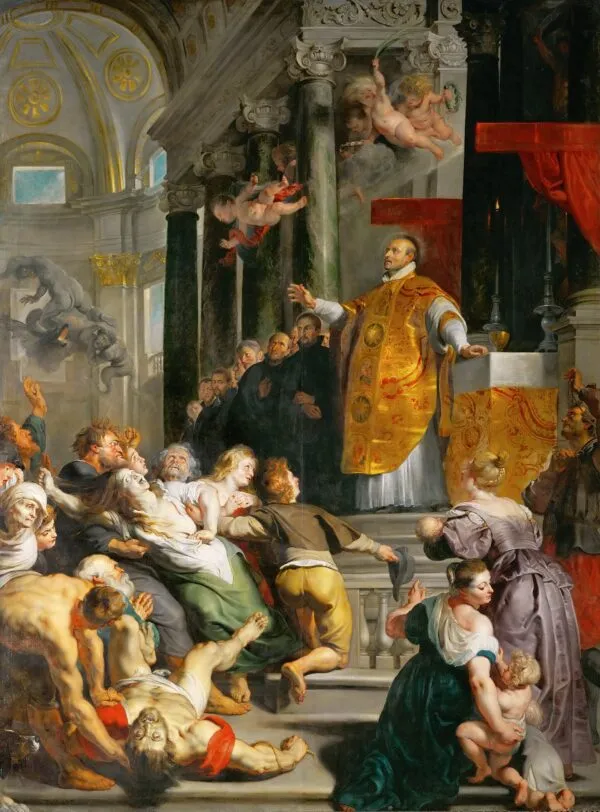
Miracle of Saint Ignatius of Loyola
Peter Paul Rubens
1618 · painting date
01
Reforming and responding are not identical
Sixteenth-century Catholic transformations were not only a mechanical reaction to Protestantism. Reform projects, religious orders and debates had their own dynamics. The Council of Trent, meeting between 1545 and 1563, was an important point in the formulation and organisation of Catholic life.
Regulation of images belongs to this history. Subjects and uses were prescribed and debated, without producing perfectly uniform art everywhere. Patrons, artists, audiences and settings continued to matter.
Miracle of Saint Ignatius of Loyola
Peter Paul Rubens
1618 · painting date
Kunsthistorisches Museum

The Adoration of the Name of Jesus
El Greco
1578–1580 · painting date
National Gallery
02
The image directs attention
Rubens arranges miracles of Ignatius and Francis Xavier through interacting figures, gestures and expectations. Viewers are invited to follow movement, not merely identify a list of attributes. El Greco makes the Adoration of the Name of Jesus visible through a different organisation of groups and registers.
Murillo’s apparition of Mary to Bernard joins encounter, vision and presence. Historical analysis does not turn the apparition into a proven event; it explains how a narrative tradition becomes a painting and acquires uses.

The Apparition of the Virgin to Saint Bernard
Bartolomé Esteban Murillo
1655 · painting date
Museo del Prado
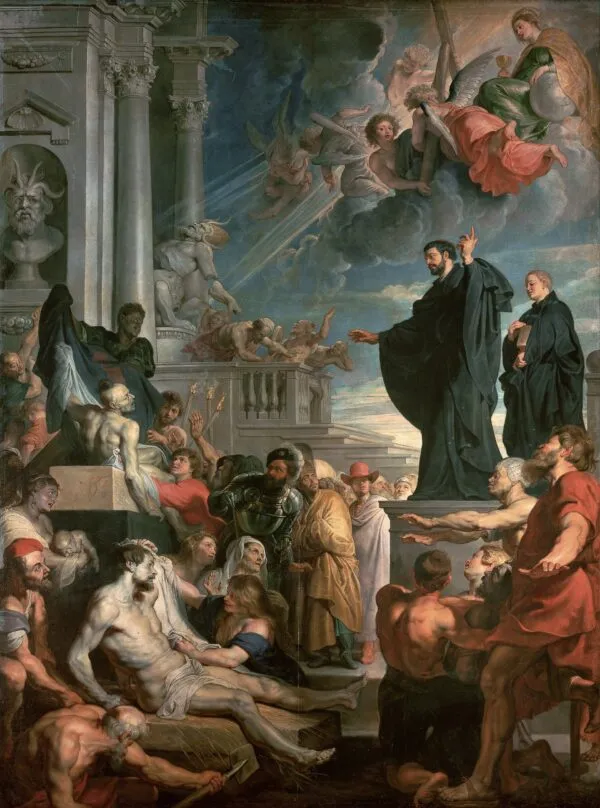
Miracles of St. Francis Xavier
Peter Paul Rubens
1617–1618 · painting date
Kunsthistorisches Museum
03
Persuasion, prayer and display
Baroque names varied artistic forms and circumstances. It is not automatically synonymous with Catholic propaganda. Artists worked in different settings and paintings circulated beyond original functions. Emotional force could support different kinds of reception.
These works also involve missionary networks, institutions and power. Comparison requires preserving attribution and version. A Rubens painting in Vienna must not be replaced in a link by a copy or another miracle scene merely because titles resemble one another.
RESEARCH & FURTHER READING
Sources for this chapter
Museum links accompanying the paintings lead to institutional collection information. Display, loans and access can change; consult the museum before visiting.