Description
The Original Work
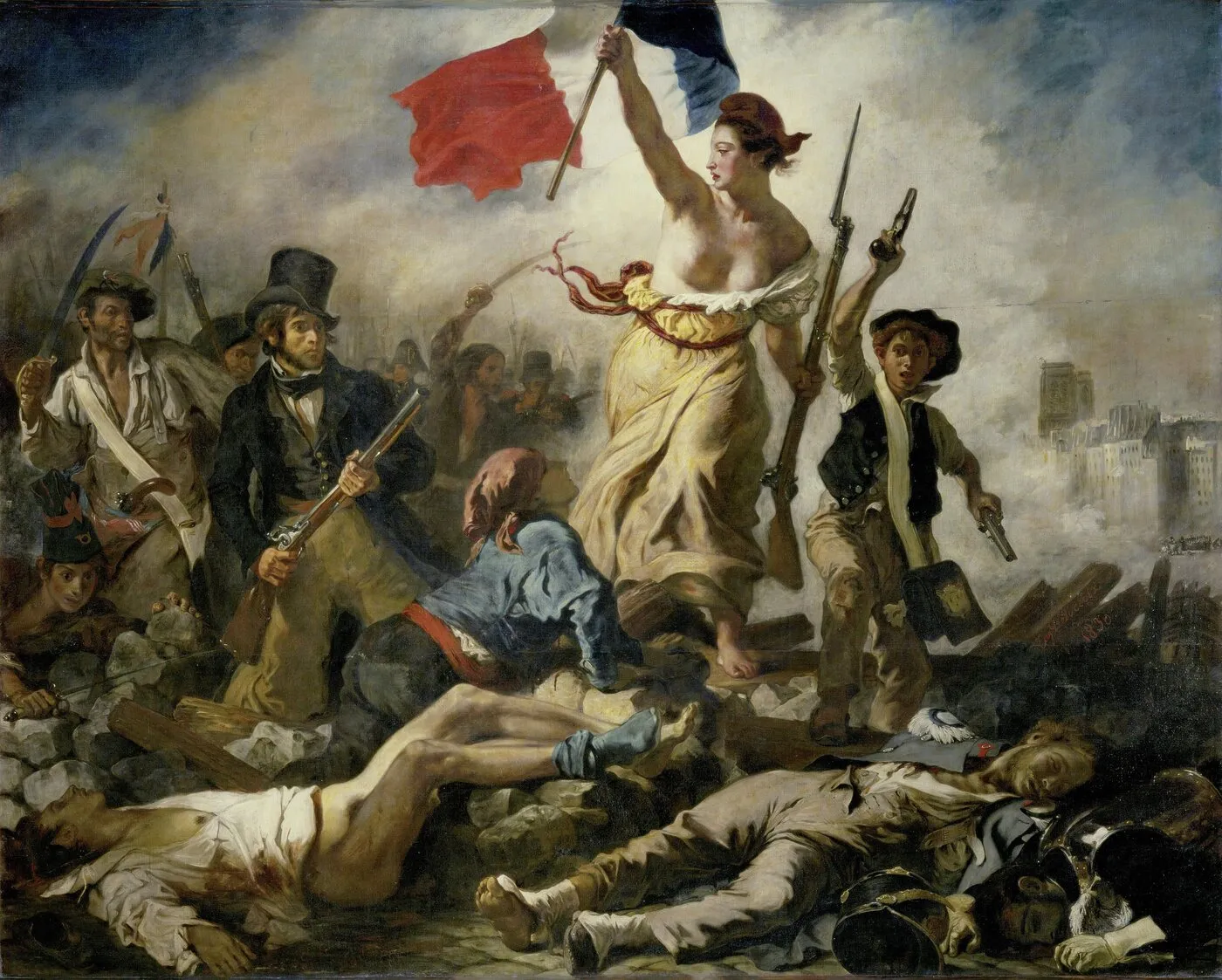
Eugène Delacroix painted Liberty Leading the People (La Liberté guidant le peuple) in the autumn of 1830, within weeks of the events it shows: the Three Glorious Days of 27–29 July, the uprising that removed Charles X from the French throne.
Delacroix did not fight, and he knew it — he wrote to his brother that if he had not fought for his country, he would at least paint for it. The result is one of the few paintings that succeeded as both reportage and allegory. The figure of Liberty is not a goddess floating above the action but a barefoot woman climbing over a barricade of real bodies, flanked by a top-hatted bourgeois with a hunting gun and a boy with two pistols. The French state bought it in 1831, then kept it out of public view for years — the image was considered too openly seditious to hang. It is in the Louvre.
Our Reproduction
This canvas is painted in pure oils on fine-grain linen over a solid pine stretcher. Delacroix worked fast and in high contrast, and the copy has to keep that energy rather than tidy it:
- Imprimatura — a linseed-oil ground over the raw linen
- Underpainting — the pyramid of the composition, from the fallen figures up to the flag
- Body colour — the smoke-filled greys, and the red, white and blue that Delacroix repeats deliberately across the canvas
- Glazing and finishing — depth in the shadow, and the loose, rapid handling of the foreground
- Varnishing — a final UV varnish to protect the colours
Production takes 10 to 15 business days. Your canvas arrives with a certificate of authenticity signed by the artist.
Why Choose This Piece
A wide, forceful, unmistakably political painting — this is not a decorative choice and it is not meant to be. It suits a room where you want a focal point that carries an argument: an office, a study, a large entrance hall. The composition drives from lower left to upper right, so it hangs well where people approach it from the left.


Reviews
There are no reviews yet.