CHAPTER 11 / 20
Franciscans, Mary and devotional life
Poverty, contemplation and familiar figures: practices interpreted differently across Christian traditions.
Thirteenth–nineteenth centuries · devotional practices

Saint Francis of Assisi in Ecstasy
Caravaggio
1594–1595 · painting date
01
New forms of closeness
Movements associated with Francis of Assisi, Clare and mendicant orders emphasised poverty and engagement with urban life. They did not replace all earlier monastic forms. Their history includes rules, debates, institutions and tensions over living an ideal.
Images of Francis may emphasise withdrawal, prayer, ecstasy or the body. They do not all say the same thing. Caravaggio lends an intimate reading physical presence, while successive patrons and viewers may give the paintings different uses.
Saint Francis of Assisi in Ecstasy
Caravaggio
1594–1595 · painting date
Wadsworth Atheneum Museum of Art

Saint Francis in Meditation
Caravaggio
1606–1607 · painting date
Galleria Nazionale d'Arte Antica
02
Mary, images and definitions
Mary with the Child can evoke motherhood, her relationship with Christ, intercession or protection, depending on context. Raphael’s Sistine Madonna is a particular composition; famous details should not obscure the whole painting or its commission.
The Catholic dogma of the Immaculate Conception, defined in 1854, concerns Mary being conceived free of original sin. It does not designate Jesus’ virginal conception. Murillo painted the subject before 1854: his work belongs to the history of devotion and its formulations, not to a contemporary illustration of that definition.

Sistine Madonna
Raphael
1512–1513 · painting date
Staatliche Kunstsammlungen Dresden
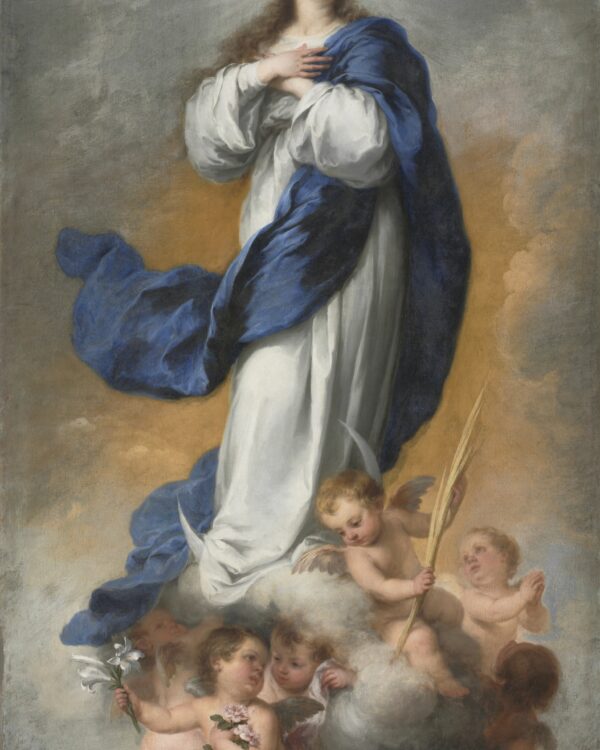
The Immaculate Conception
Bartolomé Esteban Murillo
c. 1680 · painting date
Cleveland Museum of Art
03
Name agreements and differences
Orthodox traditions give the Mother of God a major place in icons and liturgy without using formulations identical to the Catholic dogma of 1854. Protestant traditions recognise Mary’s Gospel role and differ among themselves concerning images, intercession and devotion.
In some traditions, veneration of saints is distinguished from worship of God. Others dispute some or all of these practices. Describing differences does not mean assigning one practice to every believer or making a painting decide between doctrines.
RESEARCH & FURTHER READING
Sources for this chapter
Museum links accompanying the paintings lead to institutional collection information. Display, loans and access can change; consult the museum before visiting.