CHAPTER 13 / 20
Reformations: Luther, scripture and images
Debates about belief and authority reshape religious life through different paths, not one uniform movement.
Sixteenth century · Protestant Reformations
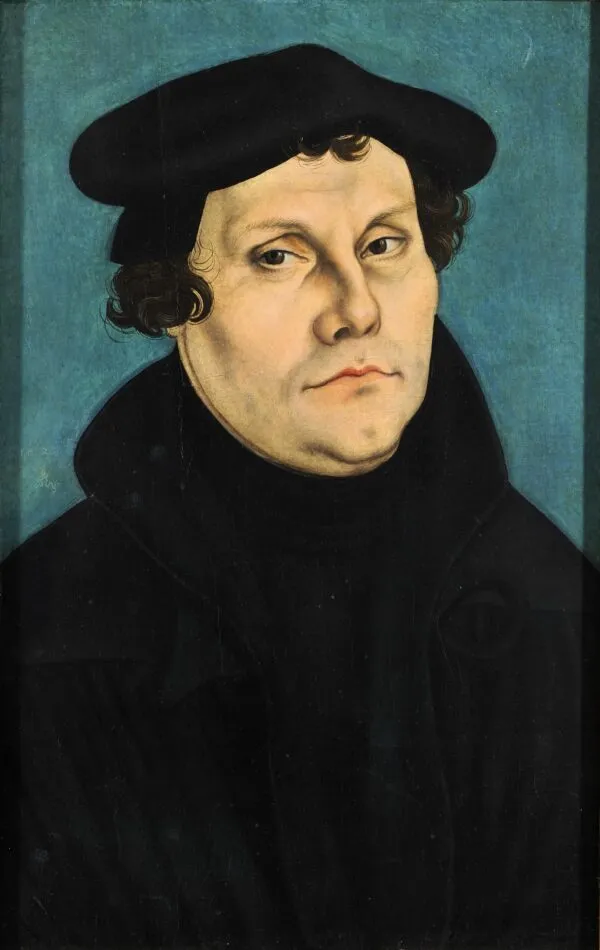
Portrait of Martin Luther
Lucas Cranach the Elder
1528 · painting date
01
Multiple challenges and trajectories
Sixteenth-century reform movements challenged authorities, practices and doctrinal formulations. Luther is an important figure, but Protestantism cannot be reduced to him. Reformed, Anglican and Anabaptist traditions developed differently, with political authorities influencing their establishment.
Printing, circulated texts and biblical translation spread ideas. This did not immediately make everyone a reader of the same book. Languages, access, institutions and debates continued to matter.
Portrait of Martin Luther
Lucas Cranach the Elder
1528 · painting date
Veste Coburg Art Collections
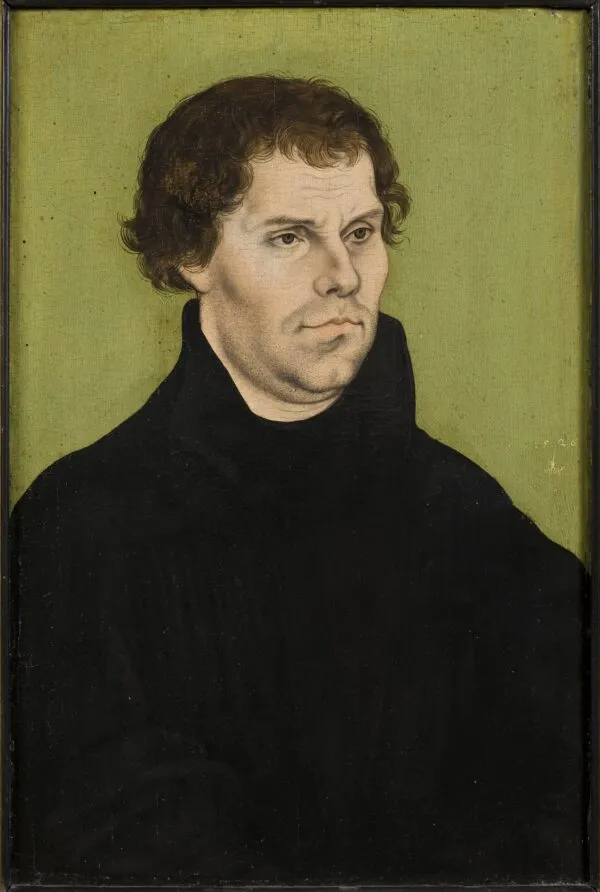
Martin Luther
Lucas Cranach the Elder
1526 · painting date
Nationalmuseum
02
Reformation also produced images
Portraits of Luther circulated a recognisable figure. The two paintings selected here are distinct versions with their own dates and collections; similar titles do not make them the same object. Cranach’s workshop belonged to a world in which painting and print could support religious positions.
Law and Gospel makes a doctrinal construction visible. Christ Blessing the Children invites consideration of a Gospel scene within a renewed culture of representation. Religious change did not everywhere eliminate Christian images.
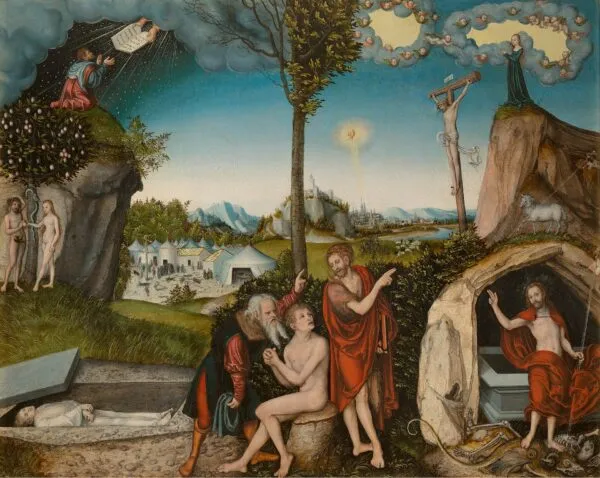
Law and Grace
Lucas Cranach the Elder
1529 · painting date
National Gallery Prague

Christ blessing the children
Lucas Cranach the Elder
16th century · painting date
Wawel Castle
03
Protestant practices differ
Some Reformed communities strongly challenged images in worship, while Lutheran traditions could retain them. Destruction of images occurred in particular settings involving religious, social and political concerns. Describing Protestants as uniformly opposed to painting would be misleading.
Confessional documents explain positions on saints, intercession and justification. They help readers understand a tradition from within but do not describe every Protestantism or local practice. Reading works alongside texts clarifies differences rather than reinforcing stereotypes.
RESEARCH & FURTHER READING
Sources for this chapter
Museum links accompanying the paintings lead to institutional collection information. Display, loans and access can change; consult the museum before visiting.