CHAPTER 06 / 20
Rome, persecution and the memory of martyrs
Local trials, saints’ narratives and an empire in transformation: a less uniform history than it may appear.
Second–fourth centuries · Roman Empire
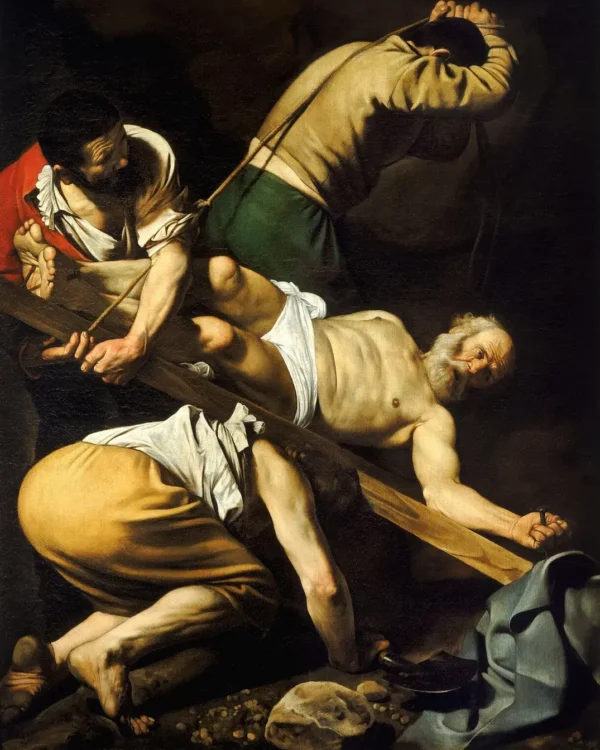
Crucifixion of Saint Peter
Caravaggio
1600 · painting date
01
Neither constant persecution nor an inevitable triumph
Early Christian communities lived within a large Roman Empire shaped by different languages, cults and local circumstances. Persecution was not identical, uninterrupted and simultaneous for three centuries. Imperial measures, local initiatives and periods of reduced pressure followed one another. Accounts of martyrdom require attention to their dates, genres and uses.
Refusal of particular religious or civic gestures could bring Christians into conflict with authorities. Describing this as an unchanging opposition between two homogeneous blocks would erase variations, conversions and negotiations that also belong to the history.
Crucifixion of Saint Peter
Caravaggio
1600 · painting date
Santa Maria del Popolo

The Ecstasy of Saint Cecilia
Raphael
1514 · painting date
Pinacoteca Nazionale di Bologna
02
Memory takes a visible form
Peter, Cecilia, Sebastian and Ursula occupy traditions of remembrance whose evidence differs. A saint’s legend cannot be treated without examination as a contemporary court record. Much later paintings help viewers identify figures through gestures, instruments, wounds and attributes.
Caravaggio foregrounds the body and movement in Peter’s Crucifixion and Ursula’s Martyrdom. Raphael gives Cecilia a different relationship with music and contemplation; El Greco stretches Sebastian’s forms and colours. These are interpretations of Christian memory, not portraits made from life in antiquity.
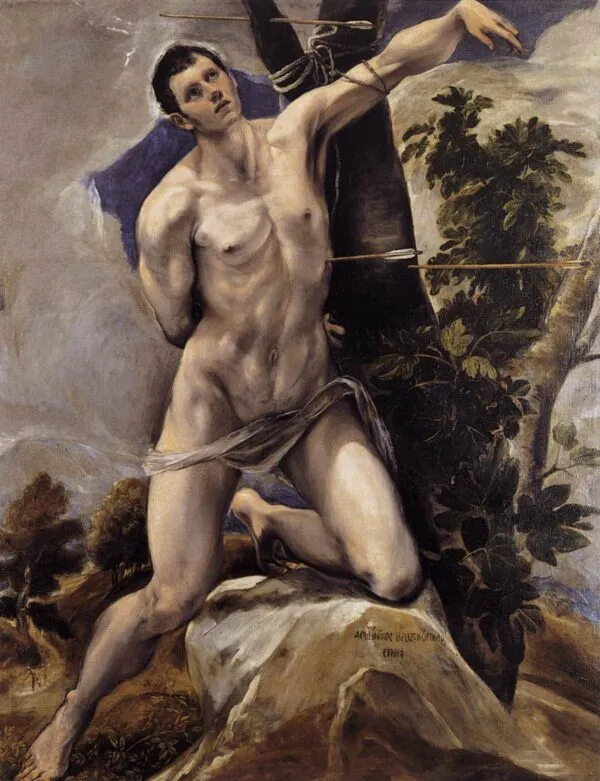
The Martyrdom of Saint Sebastian
El Greco
1577 · painting date
Palencia Cathedral

The Martyrdom of Saint Ursula
Caravaggio
1610 · painting date
Gallerie d'Italia
03
From toleration to imperial Christianity
The measures of toleration associated with Constantine and Licinius in 313 are an important marker. They do not mean that everyone in the empire became Christian at that moment. Relationships between imperial power, bishops and communities changed during the fourth century, raising new questions of authority and coexistence.
The transition also invites reflection on political uses of religion. A community that experienced persecution could participate in exclusion in another setting. Remembering martyrs should not become a timeless justification of violence against other groups.
RESEARCH & FURTHER READING
Sources for this chapter
Museum links accompanying the paintings lead to institutional collection information. Display, loans and access can change; consult the museum before visiting.