The Painter
Edgar Degas
1834–1917 · French · Impressionism
Parisian painter of ballet classes, racecourses, cafés and bathers, working in oil and pastel and, late in life, in wax.
Hilaire-Germain-Edgar De Gas was born in Paris on 19 July 1834, the eldest of five children of Augustin De Gas, a banker, and Célestine Musson, a Creole from New Orleans, who died when he was thirteen. He studied at the Lycée Louis-le-Grand, took his baccalauréat in 1853 and briefly enrolled in law before turning to art. In 1855 he trained under Louis Lamothe, a former pupil of Ingres, entered the École des Beaux-Arts and met Ingres himself, who urged him to draw constantly. From 1856 he spent about three years in Italy, copying Michelangelo, Raphael and Titian. Back in Paris he first exhibited at the Salon in 1865, served in the National Guard in 1870, and between 1874 and 1886 showed in seven of the eight Impressionist exhibitions. His eyesight declined steadily; he left his longtime home in 1912 and died in Paris on 27 September 1917, aged eighty-three.
Degas began with history painting and portraits, then turned from the late 1860s to modern Paris: racecourses, the Opera, cafés, milliners and laundresses. He called himself a realist or an Independent rather than an Impressionist, disliked painting outdoors and built his pictures on drawing. His key works include The Bellelli Family (about 1858–67, Musée d'Orsay, Paris), a portrait of his aunt's household begun in Naples and Florence; A Cotton Office in New Orleans (1873, Musée des Beaux-Arts, Pau), painted while visiting relatives and the only work of his bought by a museum in his lifetime; L'Absinthe (1875–76, Musée d'Orsay), set in a Paris café; and The Tub (1886, Musée d'Orsay), from the suite of pastel nudes shown at the last Impressionist exhibition. From the later 1870s he relied increasingly on pastel, often reworked in layers, and as his sight failed he turned more and more to wax modelling.
Degas was already established when he died, and his reputation has only grown. The Musée du Luxembourg bought The Bellelli Family in 1918, and the work later passed to the Orsay. Of his sculpture, only Little Dancer Aged Fourteen was shown in public, at the 1881 Impressionist exhibition; its wax, reworked afterwards, is now at the National Gallery of Art in Washington. After his death the Hébrard foundry cast bronzes from the waxes found in his studio, from about 1920 to 1936. For an oil painter reproducing him, his work offers a lesson in drawing-led structure: restrained, earthy flesh tones against dark interiors, the glare of footlights and gaslamps on pale tulle, and surfaces built up in thin, reworked layers rather than in a single sweep.
Reproducing this painter
Impressionist paint is laid in short, separate strokes that the eye mixes rather than the palette, and most of it goes on wet-in-wet in a single session. Reproducing it means committing to the stroke: rework a passage and the colour muddies, and the light dies with it.
Biographical details on Wikipedia.
Works by Edgar Degas we reproduce
-

L'Absinthe
Edgar Degasfrom €103,00 – €863,00 -

The Bellelli Family
Edgar Degasfrom €94,00 – €787,00 -
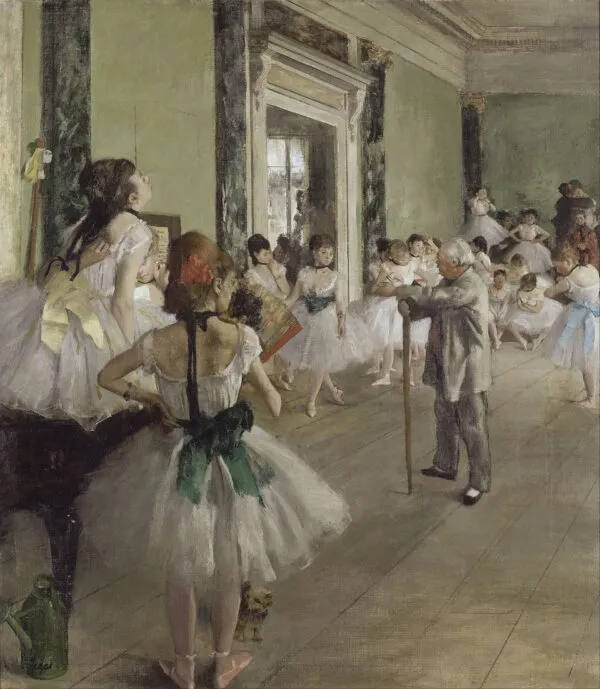
The Ballet Class
Edgar Degasfrom €85,00 – €725,00 -

Interior
Edgar Degasfrom €108,00 – €913,00 -

Miss La La at the Cirque Fernando
Edgar Degasfrom €116,00 – €958,00 -

The Millinery Shop by Edgar Degas
Edgar Degasfrom €83,00 – €700,00 -

The Tub
Edgar Degasfrom €103,00 – €863,00 -

Count Lepic and His Daughters
Edgar Degasfrom €94,00 – €781,00 -

A Cotton Office in New Orleans
Edgar Degasfrom €96,00 – €800,00 -
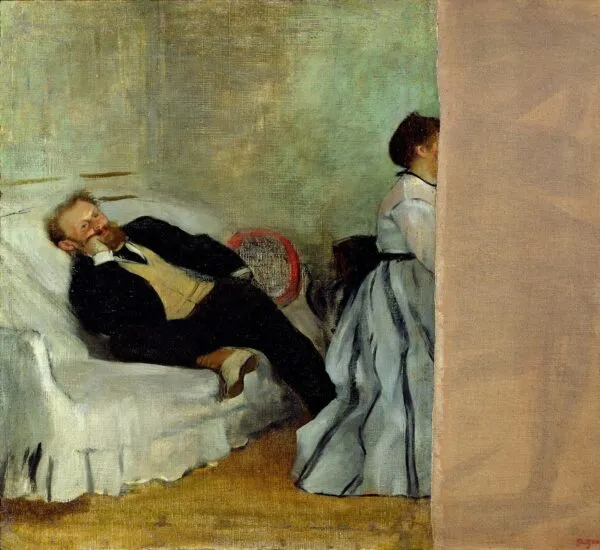
Mr. and Mrs. Édouard Manet
Edgar Degasfrom €83,00 – €686,00 -
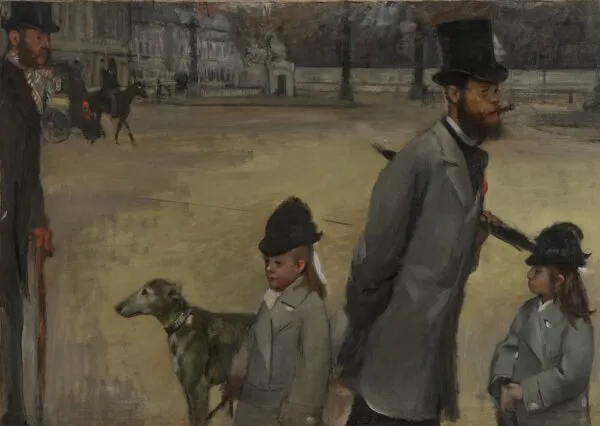
Place de la Concorde
Edgar Degasfrom €106,00 – €888,00 -
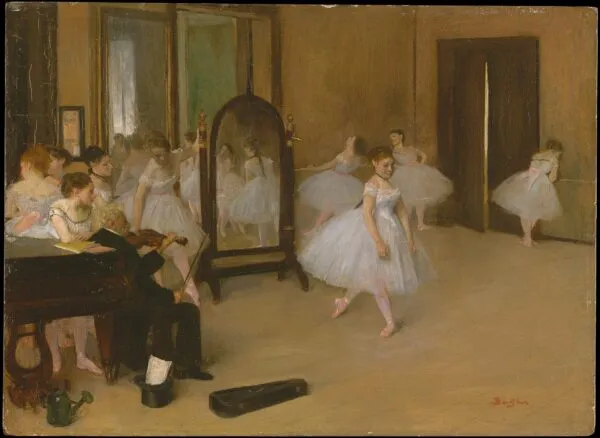
The Dancing Class
Edgar Degasfrom €103,00 – €863,00
Paintings by Edgar Degas available to order
Any of these can be painted for you by hand. Tell us which one and the size you want, and we will send a quote within 48 hours.
- L'Absinthe
- The Bellelli Family
- The Ballet Class
- Interior
- Miss La La at the Cirque Fernando
- The Millinery Shop by Edgar Degas
- Count Lepic and His Daughters
- A Cotton Office in New Orleans