The Painter
Claude Monet
1840–1926 · French · Impressionism
The founder of Impressionism, and the painter who spent thirty years on one pond.
Claude Monet gave Impressionism its name — by accident. When he showed Impression, Sunrise at the independent exhibition of 1874, a critic used the title to mock the whole group for exhibiting sketches. Monet kept the insult and spent the next fifty years proving it was a method.
That method was to paint light rather than things. He worked outdoors, fast, in series: the same haystack, the same cathedral façade, the same water at different hours, because what changed between canvases was the only subject he cared about. From 1883 he lived at Giverny, where he built the water garden that occupied the last thirty years of his life.
He was still working on the Water Lilies in 1926, the year he died, painting through cataracts that shifted his whole palette towards red and amber. The late panels abandon the horizon line entirely.
Reproducing this painter
Impressionist paint is laid in short, separate strokes that the eye mixes rather than the palette, and most of it goes on wet-in-wet in a single session. Reproducing it means committing to the stroke: rework a passage and the colour muddies, and the light dies with it.
Biographical details on Wikipedia.
Works by Claude Monet we reproduce
-

Water Lilies
Claude MonetPrice range: €80,00 through €668,00 -

Impression, Sunrise
Claude Monetfrom €98,00 – €812,00 -

Women in the Garden
Claude Monetfrom €94,00 – €775,00 -

Garden at Sainte-Adresse
Claude Monetfrom €101,00 – €838,00 -

Woman with a Parasol
Claude Monetfrom €94,00 – €781,00 -
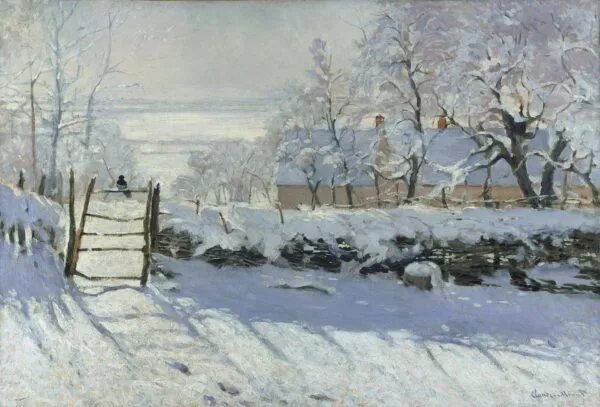
The Magpie
Claude Monetfrom €110,00 – €926,00 -
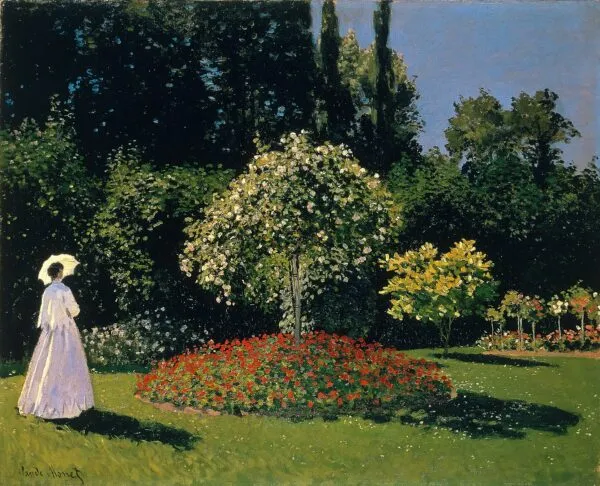
Woman in the Garden
Claude Monetfrom €94,00 – €775,00 -
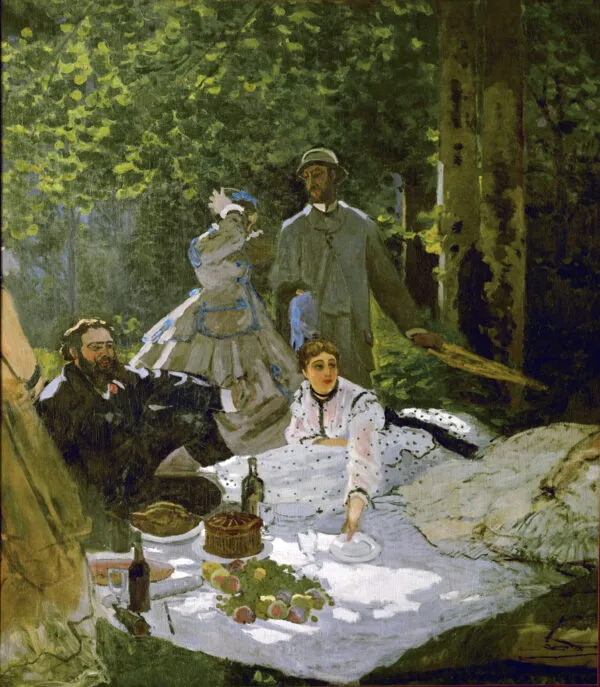
Le Déjeuner sur l'herbe
Claude Monetfrom €85,00 – €725,00 -
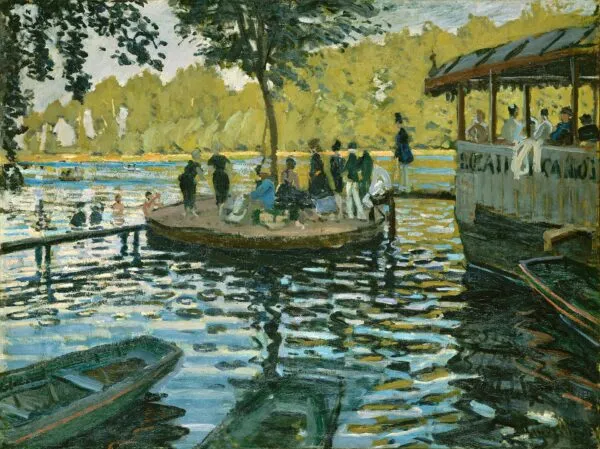
La Grenouillère
Claude Monetfrom €101,00 – €845,00 -

Régates à Argenteuil
Claude Monetfrom €119,00 – €977,00 -
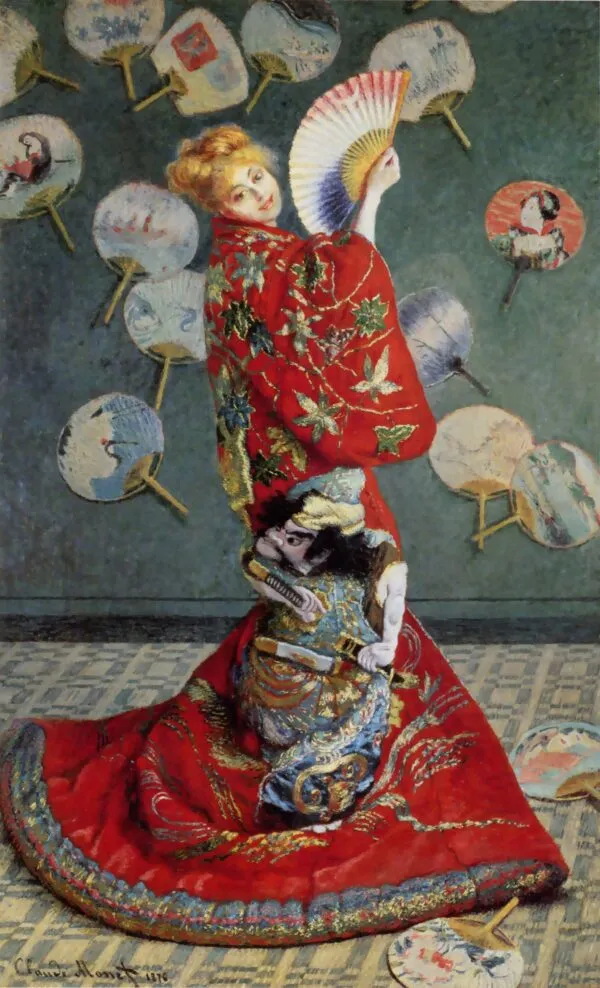
Madame Monet wearing a kimono
Claude Monetfrom €124,00 – €1 039,00 -
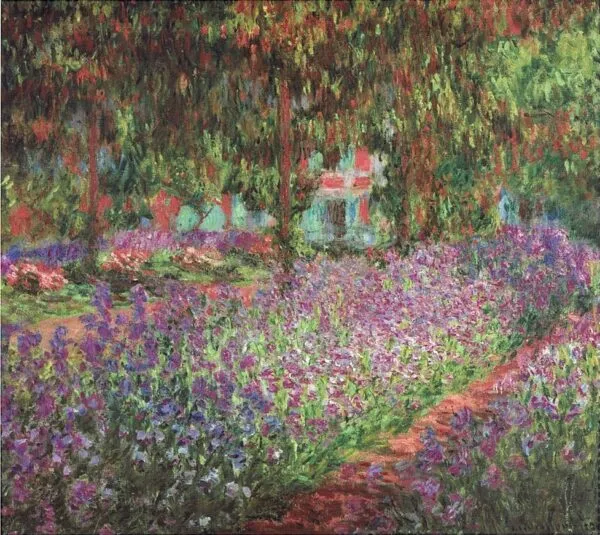
The artist's garden at Giverny
Claude Monetfrom €85,00 – €706,00
Paintings by Claude Monet available to order
Any of these can be painted for you by hand. Tell us which one and the size you want, and we will send a quote within 48 hours.
- Impression, Sunrise
- Women in the Garden
- Garden at Sainte-Adresse
- Woman with a Parasol – Madame Monet and Her Son
- The Magpie
- Woman in the Garden
- Le Déjeuner sur l'herbe
- La Grenouillère