The Painter
Amedeo Modigliani
1884–1920 · Italian · modern art
Italian portraitist of Paris who painted long-necked sitters and reclining nudes in thin, supple paint and a few earthy colours.
Amedeo Clemente Modigliani was born on 12 July 1884 in Livorno, Italy, into a Sephardic Jewish family of precarious means; his mother, Eugénie Garsin, encouraged his vocation, and his health was fragile from childhood. At about fourteen he entered the studio of Guglielmo Micheli in Livorno, a landscape painter trained in the Macchiaioli tradition. He studied the nude in Florence in 1902 and enrolled at the Venice academy in 1903, where he looked closely at the Venetian masters. In early 1906 he settled in Paris, first in Montmartre and, from about 1909, in Montparnasse, where he met Constantin Brancusi and turned mainly to sculpture. He gave it up around 1914 and returned to painting, backed by the dealers Paul Guillaume and, from 1916 or 1917, Léopold Zborowski. Tuberculosis, contracted in his youth, killed him at the Hôpital de la Charité in Paris on 24 January 1920, aged thirty-five.
His sculpture, about twenty-five stone heads carved directly, left him with an elongated and simplified line that passed into his paintings. By about 1915–16 his manner was settled: a sinuous contour enclosing softly suggested volumes, sober paint, and a palette of ochres, browns, greys and blacks lifted with blue and green. He painted almost nothing but people. Paul Guillaume, Novo Pilota (1915, Musée de l'Orangerie, Paris) shows his dealer in suit and gloves under an inscription that hails him as a new pilot of the avant-garde. From 1916 came the large nudes, among them Reclining Nude (1917, Metropolitan Museum of Art, New York), painted from life in thin layers. His only solo exhibition, at the Galerie Berthe Weill in December 1917, ended when the police insisted that its nudes be removed. In the south of France in 1918–19 he painted portraits such as Gypsy Woman with Baby (1919, National Gallery of Art, Washington).
On the day after his death, Jeanne Hébuterne, his companion and model, took her own life while pregnant. André Salmon's 1926 biography helped fix the image of a doomed bohemian, and his daughter Jeanne Modigliani argued in a 1958 book that the work should be read apart from that legend. He ran no workshop and founded no school, but he belonged to the Montparnasse circle of Chaim Soutine, Moïse Kisling and Jacques Lipchitz, and Paris gave him a large retrospective at the Musée d'Art Moderne in 1981. Technical study of his nudes shows how he worked: a limited range of tube colours, with lead white, ochres, umbers, vermilion and blues; thin paint, flesh smoothed after fan-shaped strokes, and outlines drawn in black, blue or brown at the edge of bare ground. For a painter in oils who reproduces him, this offers a lesson in economy: few pigments, thin layers, and a line that carries the form.
Reproducing this painter
The Post-Impressionists kept the pure colour and dropped the optical realism, using distortion and heavy paint to carry feeling and structure. The surface is often thick enough to hold the mark of the brush, which is precisely what a print cannot give you.
Biographical details on Wikipedia.
Works by Amedeo Modigliani we reproduce
-

Nu couché
Amedeo Modiglianifrom €121,00 – €1 002,00 -

Alice
Amedeo Modiglianifrom €151,00 – €1 260,00 -

Nude Sitting on a Divan
Amedeo Modiglianifrom €119,00 – €996,00 -

Female Nude
Amedeo Modiglianifrom €116,00 – €977,00 -

Jacques and Berthe Lipchitz
Amedeo Modiglianifrom €114,00 – €952,00 -

Seated Nude
Amedeo Modiglianifrom €124,00 – €1 021,00 -
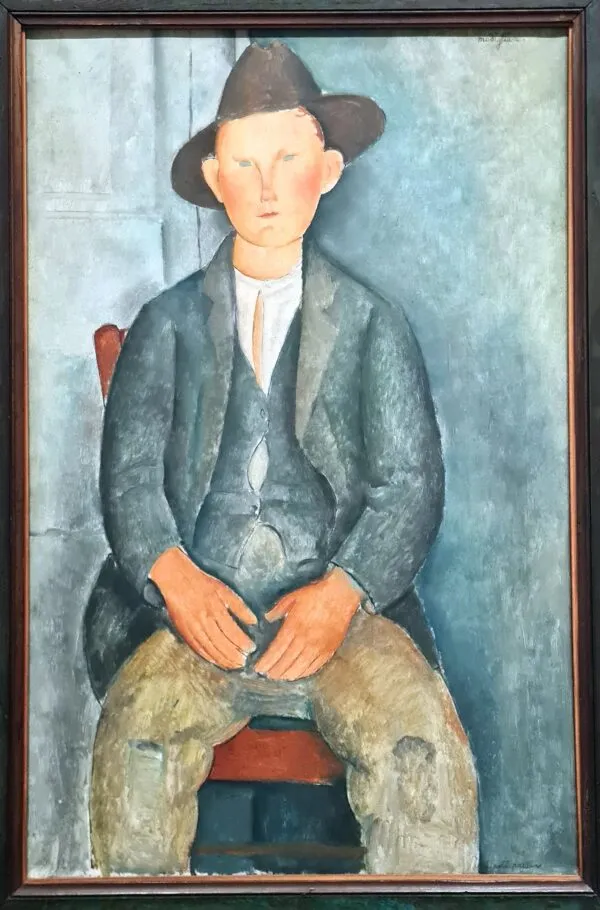
The Little Peasant
Amedeo Modiglianifrom €116,00 – €958,00 -

Ritratto di Lunia Czechowska con ventaglio
Amedeo Modiglianifrom €116,00 – €971,00 -

Self-portrait
Amedeo Modiglianifrom €119,00 – €983,00 -
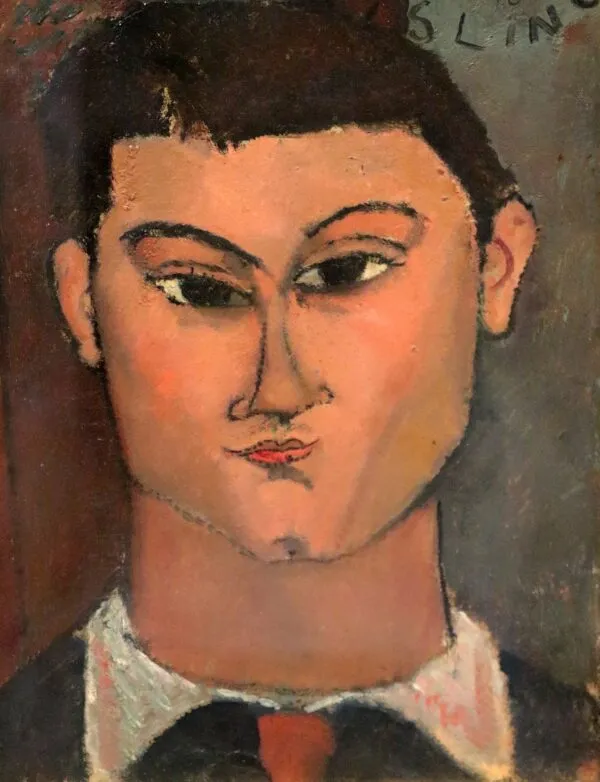
Portrait of Moise Kiesling
Amedeo Modiglianifrom €98,00 – €820,00 -
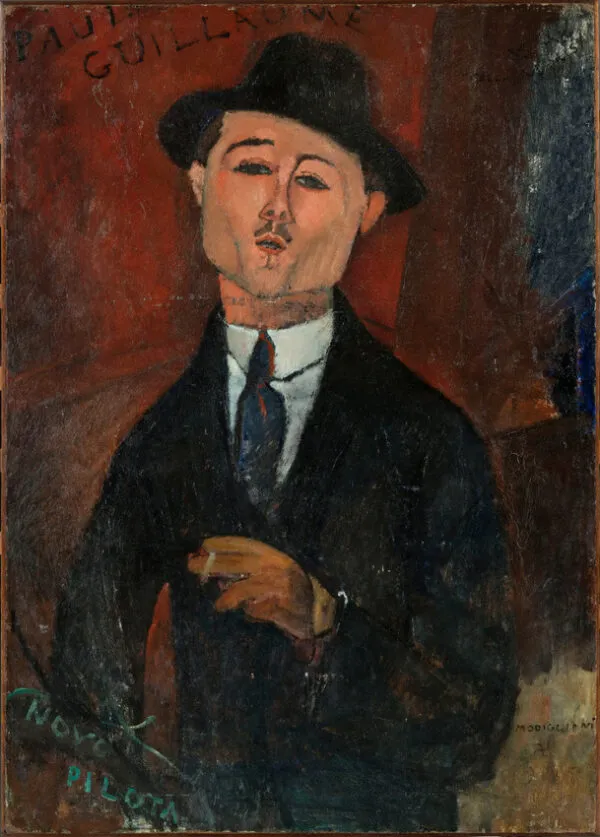
Portrait of Paul Guillaume
Amedeo Modiglianifrom €106,00 – €882,00 -
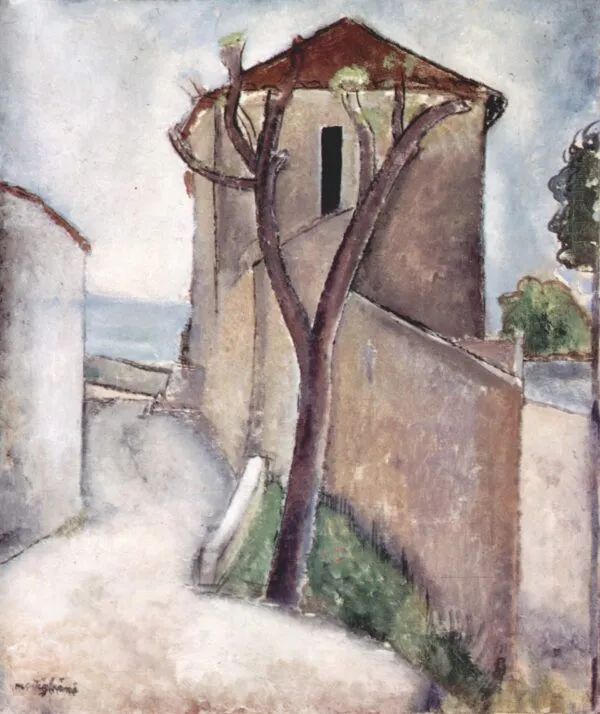
Tree and House
Amedeo Modiglianifrom €91,00 – €750,00
Paintings by Amedeo Modigliani available to order
Any of these can be painted for you by hand. Tell us which one and the size you want, and we will send a quote within 48 hours.
- Nu couché
- Alice
- Nude Sitting on a Divan
- Female Nude
- Seated Nude
- Jacques and Berthe Lipchitz
- The Little Peasant
- Seated Nude