CHAPTER 20 / 20
Contemporary Christianities, memory and dialogue
Understanding living traditions without reducing them to divisions or declaring them extinct.
Twentieth–twenty-first centuries · memory and dialogue

The Good Samaritan
Vincent van Gogh
1890 · painting date
01
Living traditions and uneven change
Modern communities, relationships with states and religious practices have changed in ways that vary greatly between countries. Secularisation, renewal, migration and changing affiliations do not form one uniform global story.
Catholic, Orthodox and Protestant expressions continue to diversify. A historical page cannot assign the same experience to everyone who identifies as Christian. This journey supplies ways to read artworks and sources, not a definitive inventory of present-day beliefs.
The Good Samaritan
Vincent van Gogh
1890 · painting date
Kröller-Müller Museum

Christ and the Samaritan Woman
Duccio di Buoninsegna
1310 · painting date
Thyssen-Bornemisza Museum
02
Ecumenism and relationships with other religions
Ecumenism concerns relationships between different Christian traditions. Interreligious dialogue concerns relationships with other religions: the terms are not interchangeable. The World Council of Churches’ founding in 1948 and Vatican II documents are important documentary markers without encompassing every initiative.
Unitatis redintegratio, Nostra aetate and Dignitatis humanae present Catholic positions on Christian unity, other religions and religious freedom. They do not automatically speak for Orthodox churches, Protestant communities or other religions. Recognising this supports dialogue without erasing differences.
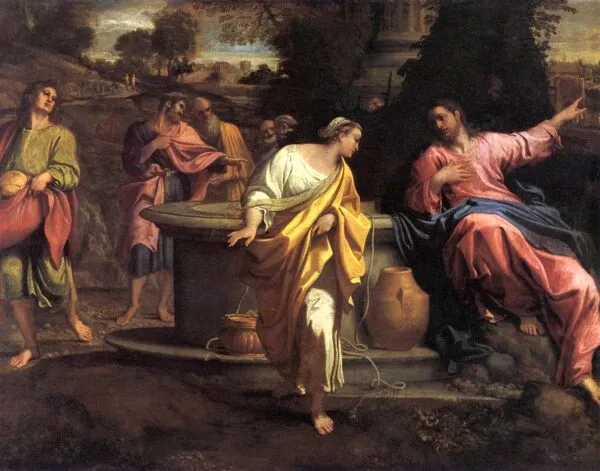
Christ and the Woman of Samaria
Annibale Carracci
c. 1594 · painting date
Pinacoteca di Brera
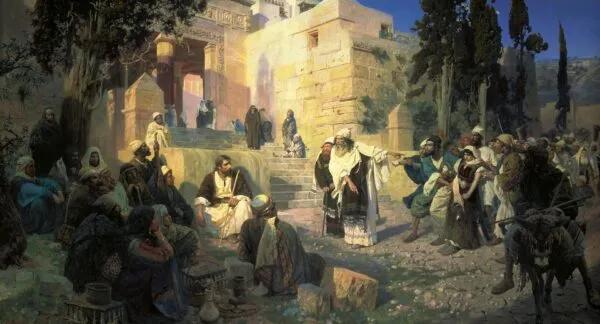
Christ and the Woman Taken in Adultery
Vasily Polenov
1888 · painting date
Russian Museum
03
Why end with older paintings
Paintings of the Good Samaritan and Jesus’ encounters offer earlier images through which to consider care, listening and judgement. They do not depict a 1948 meeting or a Vatican II session. Their presence compares themes rather than replacing contemporary archives with old pictures.
Artworks can remain active within new readings. Museums preserve particular objects and their histories; reproductions make their images accessible elsewhere without replacing originals. Linked institutional documents invite further research beyond the journey and renewed questions about what images mean.
RESEARCH & FURTHER READING
Sources for this chapter
Museum links accompanying the paintings lead to institutional collection information. Display, loans and access can change; consult the museum before visiting.