The Painter
Paul Cézanne
1839–1906 · French · Post-impressionism
Painter of Mont Sainte-Victoire, card players, still lifes and bathers, who built form out of colour in the south of France.
Paul Cézanne was born on 19 January 1839 in Aix-en-Provence, the son of Louis-Auguste Cézanne, a hat dealer who became a banker and in 1848 opened the Cézanne et Cabassol bank, which gave the family a comfortable life. At the Collège Bourbon he befriended Émile Zola. From 1857 he studied drawing at the municipal school in Aix under Joseph Gibert and, at his father's wish, briefly studied law before giving it up around 1860. In 1861 he went to Paris, failed to enter the École des Beaux-Arts and attended the free Académie Suisse, where he met Camille Pissarro. From 1872 he worked beside Pissarro at Pontoise, and he showed with the Impressionists in 1874 and 1877. He married Hortense Fiquet in 1886, lived chiefly in Aix from about 1900 and had a studio built at Les Lauves in 1901-02. He died in Aix on 22 October 1906 of pneumonia, a week after a storm caught him painting outdoors.
Cézanne's early canvases are dark and heavily worked, in the wake of Delacroix and Courbet; encouraged by Pissarro, he lightened his palette and painted out of doors. He then moved away from the Impressionist effect of the passing moment, building form through gradations of colour rather than light and shadow and letting each object keep its own place in the picture. He returned to Mont Sainte-Victoire again and again from the mid-1880s. In Montagne Sainte-Victoire with Large Pine (about 1887, Courtauld Gallery, London) green and yellow fields lead the eye to a mountain painted in cool blues and pinks, with a railway viaduct crossing the view. The Card Players exists in five canvases made in the 1890s, among them the two-player version (about 1894-95, Musée d'Orsay, Paris). The Large Bathers (1900-1906, Philadelphia Museum of Art), his largest and last treatment of nudes in a landscape, was still unfinished at his death.
Paris avant-garde painters began to discover Cézanne in the 1890s, and after his death a large retrospective at the Salon d'Automne strongly influenced the Cubists. Picasso is said to have called him the father of us all, and Matisse is reported to have called him a kind of dear god of painting. The studio at Les Lauves passed to his son Paul, and after it was bought in 1952 by a committee of admirers it became a museum. Cézanne said he wanted to make of Impressionism something solid and durable, like the art of the museums, and his canvases bear that out: thin, broken touches of colour that stack up into mass, a cool and warm palette set side by side, and a patient construction that gives a painter working in oils a great deal to follow in the layering of paint, the modelling of form by hue and the balance of a whole canvas.
Reproducing this painter
The Post-Impressionists kept the pure colour and dropped the optical realism, using distortion and heavy paint to carry feeling and structure. The surface is often thick enough to hold the mark of the brush, which is precisely what a print cannot give you.
Biographical details on Wikipedia.
Works by Paul Cézanne we reproduce
-
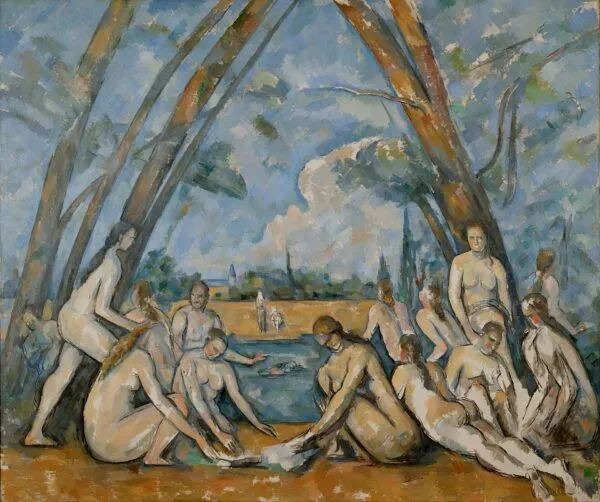
Les Grandes Baigneuses
Paul Cézannefrom €91,00 – €756,00 -
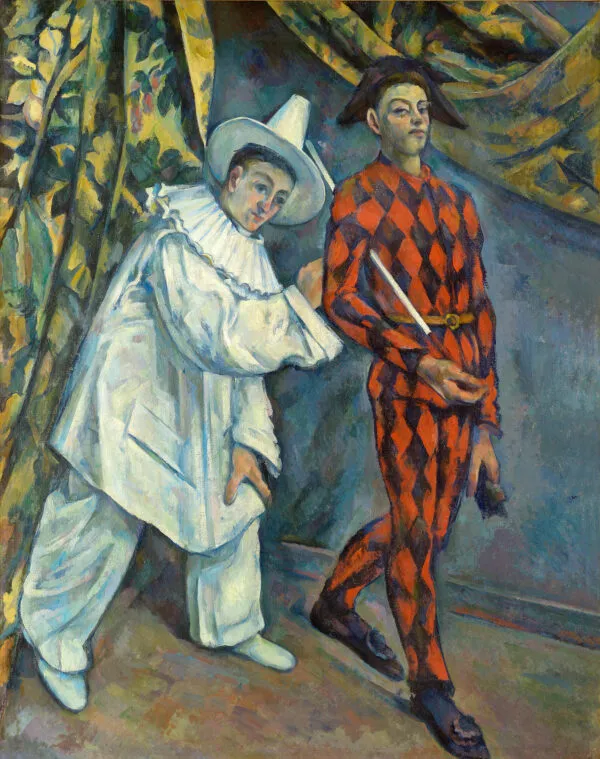
Mardi Gras
Paul Cézannefrom €96,00 – €800,00 -
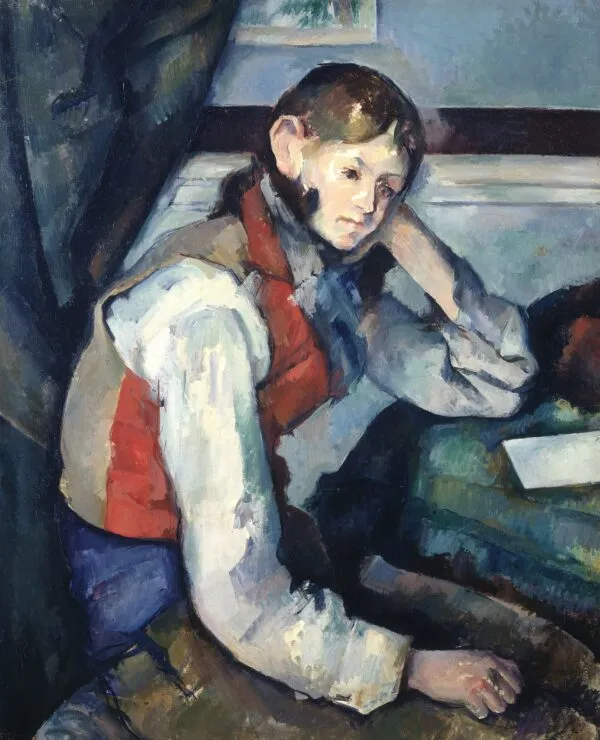
The Boy in the Red Vest
Paul Cézannefrom €94,00 – €775,00 -

The Basket of Apples
Paul Cézannefrom €94,00 – €787,00 -
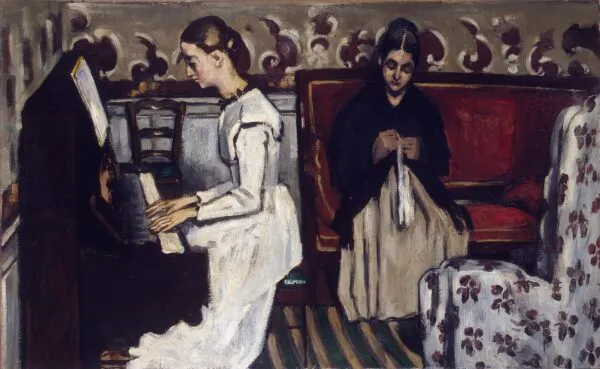
Jeune Fille au piano (Girl at the Piano
Paul Cézannefrom €124,00 – €1 021,00 -

Lady in Blue
Paul Cézannefrom €94,00 – €787,00 -
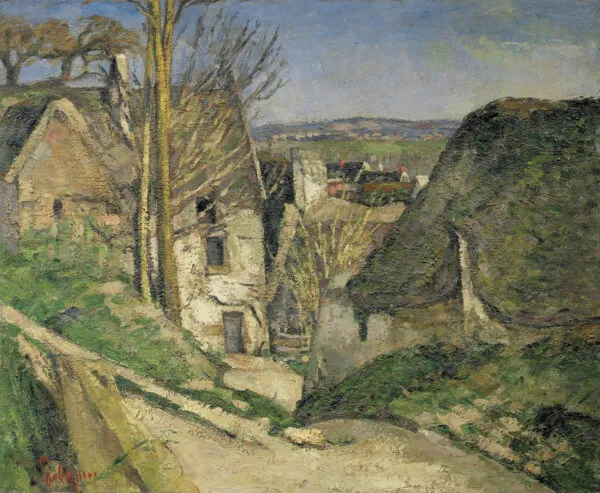
The Hanged Man's House
Paul Cézannefrom €94,00 – €769,00 -

Rideau, Cruchon et Compotier
Paul Cézannefrom €94,00 – €787,00 -

Mont Sainte-Victoire seen from Bellevue
Paul Cézannefrom €94,00 – €781,00 -

Maison devant la Sainte-Victoire près de Gardanne (House in Provence)
Paul Cézannefrom €94,00 – €775,00 -

Still Life with Onions
Paul Cézannefrom €94,00 – €787,00 -

Mont Sainte-Victoire with Large Pine
Paul Cézannefrom €103,00 – €851,00
Paintings by Paul Cézanne available to order
Any of these can be painted for you by hand. Tell us which one and the size you want, and we will send a quote within 48 hours.
- Les Grandes Baigneuses
- Mardi Gras
- The Boy in the Red Vest
- The Basket of Apples
- Lady in Blue
- Jeune Fille au piano (Girl at the Piano - The Overture to Tannhauser)
- Rideau, Cruchon et Compotier
- Mont Sainte-Victoire seen from Bellevue