The Painter
Albrecht Dürer
1471–1528 · Bavarian · German Renaissance
German Renaissance painter of Nuremberg, known for his self-portraits, the Adoration of the Magi, the Four Apostles panels and his watercolours from nature.
Albrecht Dürer was born on 21 May 1471 in the free imperial city of Nuremberg, the second son of the goldsmith Albrecht Dürer the Elder, who had come from Hungary, and of Barbara Holper; only three of their eighteen children reached adulthood. He learned goldsmithing from his father, then in 1486 entered the workshop of the painter Michael Wolgemut. From about 1490 he travelled as a journeyman through Colmar, Basel and Strasbourg, came back to Nuremberg in 1494 and married Agnes Frey that July. He probably crossed into northern Italy that autumn and opened his own workshop the following year. A second stay in Venice, in 1505-1507, produced the altarpiece Feast of the Rose Garlands (1506, National Gallery, Prague). He worked for Emperor Maximilian I from about 1512, visited the Netherlands in 1520-1521, and died in Nuremberg on 6 April 1528.
Dürer made his name with woodcuts and engravings, but his painted work shows how he joined Northern precision to Italian ideas of proportion, perspective and colour. In the Self-Portrait of 1498 (Prado, Madrid) he presents himself in fashionable Italian dress; in the Self-Portrait of 1500 (Alte Pinakothek, Munich) he adopts a frontal, symmetrical pose that recalls images of Christ. For the Elector Frederick the Wise of Saxony he painted the Adoration of the Magi (1504, Uffizi, Florence), with pure reds, greens and blues, and gave one of the kings his own features. Shortly before his death he completed the two tall limewood panels of the Four Apostles (1526, Alte Pinakothek, Munich) and presented them to the Nuremberg city council.
Dürer ran a large workshop in which Hans Baldung worked as an assistant from about 1503 to 1507, and his prints carried his designs across Europe. Interest in his work revived strongly in Germany between about 1570 and 1630, a period known as the Dürer Renaissance, and it has never really faded. Wherever he painted in oil he built the image with fine, controlled detail, and he applied the same patient eye to watercolours such as Young Hare (1502, Albertina, Vienna). For a painter in oils who reproduces him, this work offers clear drawing, saturated local colours, crisp edges and a close attention to hair, fabric and metal that rewards slow, layered work.
Reproducing this painter
Renaissance oil is a slow medium worked in transparent layers, each left to cure before the next. Form is modelled by accumulation rather than drawn, so the work cannot be hurried without showing.
Biographical details on Wikipedia.
Works by Albrecht Dürer we reproduce
-

Self-Portrait with Fur-Trimmed Robe
Albrecht Dürerfrom €106,00 – €888,00 -

Adoration of the Magi
Albrecht Dürerfrom €85,00 – €725,00 -
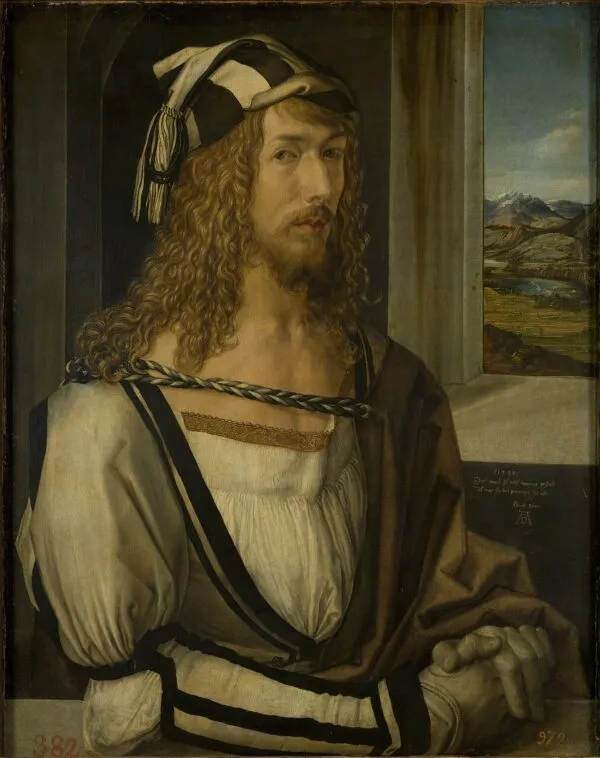
Self-Portrait
Albrecht Dürerfrom €96,00 – €794,00 -
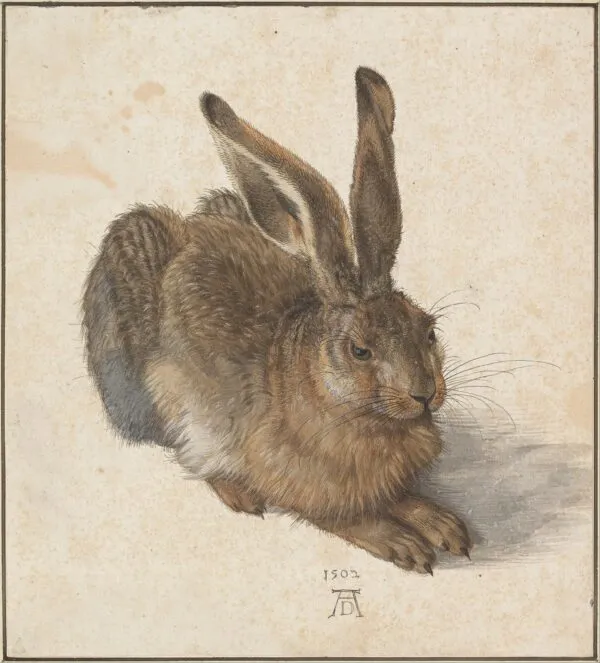
Young Hare
Albrecht Dürerfrom €83,00 – €700,00 -

Feast of the Rosary
Albrecht Dürerfrom €91,00 – €750,00 -

Portrait of the Artist Holding a Thistle
Albrecht Dürerfrom €101,00 – €838,00 -

Martyrdom of the Ten Thousand
Albrecht Dürerfrom €85,00 – €719,00 -

Adoration of the Trinity
Albrecht Dürerfrom €83,00 – €686,00 -

Christ Among the Doctors
Albrecht Dürerfrom €94,00 – €787,00 -
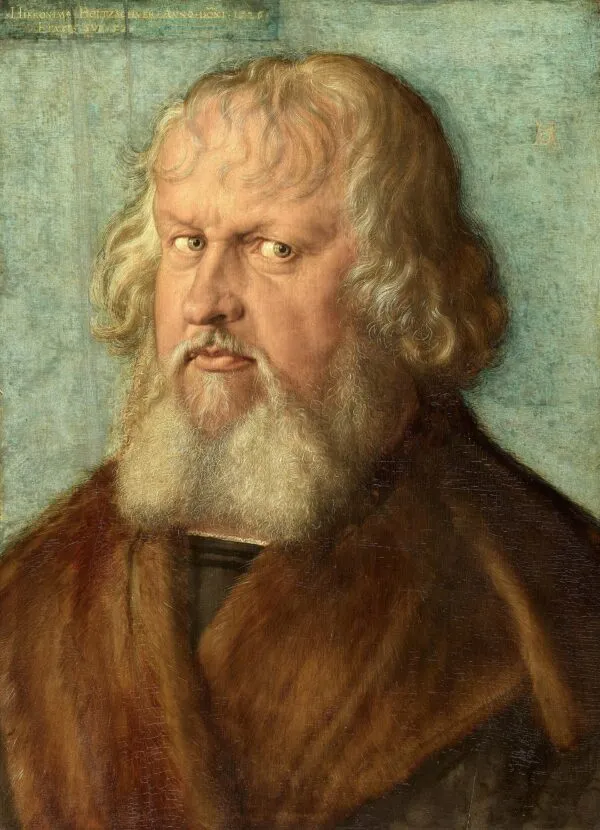
Portrait of Hieronymus Holzschuher
Albrecht Dürerfrom €103,00 – €870,00 -
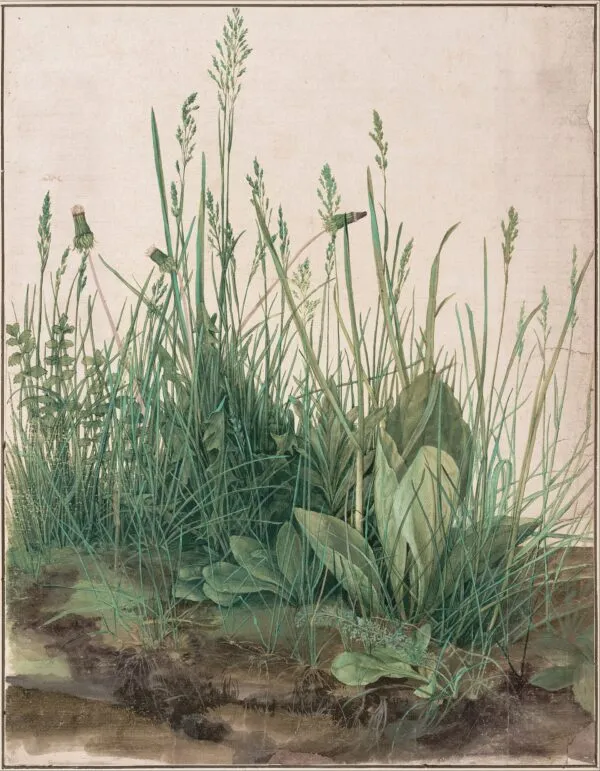
Great Piece of Turf
Albrecht Dürerfrom €98,00 – €806,00 -
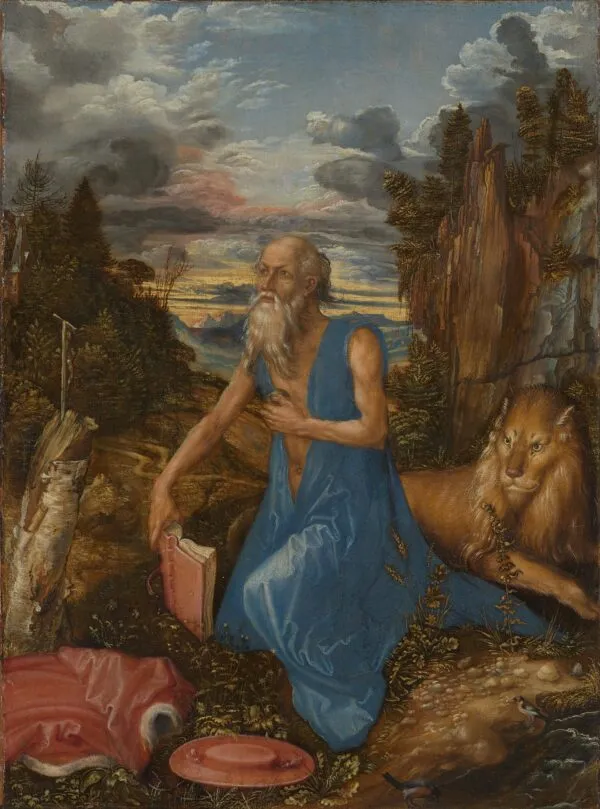
St. Jerome in the Wilderness
Albrecht Dürerfrom €101,00 – €851,00
Paintings by Albrecht Dürer available to order
Any of these can be painted for you by hand. Tell us which one and the size you want, and we will send a quote within 48 hours.
- Self-Portrait with Fur-Trimmed Robe
- Adoration of the Magi
- Feast of the Rosary
- Self-Portrait
- Portrait of the Artist Holding a Thistle
- Heller Altarpiece
- Martyrdom of the Ten Thousand
- Christ Among the Doctors